Mitochondrial quality control
How cells identify and manage damaged mitochondria.
OUR SCIENCE / UROLITHIN A
Our laboratory focuses on Urolithin A from its microbial origin to its identity as a defined ingredient. We connect biological research, analytical characterisation and application review so qualified B2B teams can make decisions on clear evidence, documented specifications and responsible science.

Urolithin A (UA) is a naturally occurring metabolite formed when selected gut microbes transform ellagitannins and ellagic-acid-related compounds found in foods such as pomegranate, walnuts and certain berries.
These foods provide the precursors, not a consistent amount of finished UA. Because gut microbiomes differ from person to person, the same food source can lead to different urolithin profiles and different levels of UA exposure. Direct supplementation is therefore studied as a way to provide a defined molecule while reducing the variability associated with dietary conversion.
In scientific terms, UA is a gut microbiota-derived postbiotic metabolite. Current research focuses on its relationship with mitochondrial quality control, cellular energy metabolism and muscle-related endpoints. We review those findings alongside the identity, assay, stability and documentation of the specific ingredient being evaluated.
Mitochondria convert nutrients into usable cellular energy. Their quality and renewal are central to how muscle and other high-demand tissues are studied. Urolithin A research examines these pathways across models and carefully designed human trials.
Approximate biological estimate; the number varies by tissue, age and measurement method. It is context for research, not a clinical outcome claim.
Urolithin A is studied primarily for its relationship with mitochondrial quality control. Mitochondria are continuously monitored, and damaged organelles can be selectively removed through mitophagy and replaced through mitochondrial renewal.
Cell and animal studies associate UA with pathways involved in mitophagy, mitochondrial biogenesis, energy metabolism and cellular stress responses. These findings provide a mechanistic basis for research into muscle function and physical performance, but model-system results do not establish a universal outcome in humans.
Human studies have examined mitochondrial gene and protein markers, acylcarnitines, muscle endurance and selected inflammatory markers. Results can vary with population, dose, study duration and test material, so each finding needs to be interpreted within its study design and evidence level.
How cells identify and manage damaged mitochondria.
Selective clearance of mitochondria that are no longer functional.
Signals associated with mitochondrial renewal and replacement.
Energy production and substrate-use markers in research models.
Cellular stress and redox endpoints reported in mechanistic work.
Endurance, strength and physical-performance measures in human studies.
One pathway read in two steps: where Urolithin A comes from, and how a variable dietary route becomes a defined molecule.
Ellagitannins and ellagic acid rich foods.
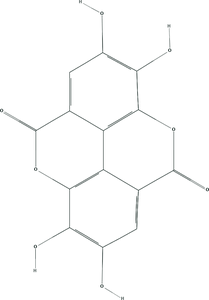
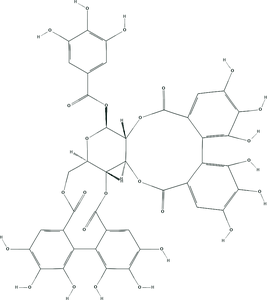
Urolithin A precursors: ellagitannins and ellagic acid.
A single characterised molecule, rather than a variable dietary conversion.
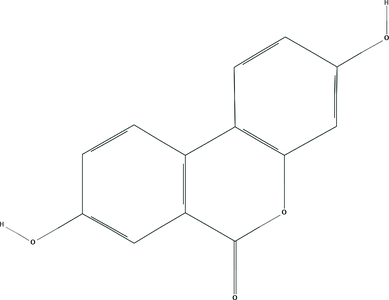
Chemical structures are drawn from public reference data (PubChem).
Clinical research on Urolithin A is ongoing. Human trials have mainly examined muscle endurance, strength, exercise performance, mitochondrial biomarkers and vascular endothelial function in defined adult populations.
Reported outcomes vary across studies. The review below keeps the study year, population, sample size, intervention, endpoints, positive findings, non-significant findings and limitations together so that no single result is presented without its context.
Healthy older adults
n=60
250, 500 or 1,000 mg/day
up to 4 weeks
Positive: safety/tolerability, bioavailability, mitochondrial gene-expression signals and lower plasma acylcarnitines.
Not established: the study was not powered to establish a clinical performance benefit.
Short intervention; healthy, selected population; sponsor-funded.
Read DOI 10.1038/s42255-019-0073-4 ↗Adults aged 65–90
n=66
1,000 mg/day
4 months
Positive: selected muscle-endurance measure improved versus placebo.
Not significant: 6-minute walk distance and maximal ATP production did not differ from placebo.
Small sample, short duration and selected older adults; sponsor-funded.
Read DOI 10.1001/jamanetworkopen.2021.44279 ↗Adults aged 40–64
n=88
500 or 1,000 mg/day
4 months
Positive: secondary leg-strength measures increased by about 10–12%.
Not significant: peak power output, the primary endpoint, was not statistically significant.
Primary endpoint not met; limited duration and selected population; sponsor-funded.
Read DOI 10.1016/j.xcrm.2022.100633 ↗These are study interventions, not intake or dosage guidance. The available human evidence remains preliminary; findings depend on design, dose, duration, population and test material, and should not be generalized to disease treatment or universal anti-aging outcomes.
A clear distinction between research models, human outcomes and commercial language protects scientific accuracy.
Cell models can show pathway activity, mitochondrial markers or stress responses. They do not establish an effect in a person.
Animal studies help test biology, dose ranges and endpoints in a controlled model. They are not human efficacy studies.
Human results must be read with the population, sample size, comparator, dose, duration, endpoint and statistical result.
Ingredient or product copy must not turn a model result or one clinical finding into a guaranteed consumer outcome.
Boundary: animal experiments or an individual clinical result must not be written as a definitive claim to “improve aging,” “enhance immunity,” or “treat disease.”
Four checkpoints from the published record. Each entry names the study and the journal, and the population and duration where the paper reports them.
Ryu et al. reported that oral urolithin A induced mitophagy in vitro and in vivo, and improved exercise capacity in aged mice and in young rats. Model-system findings, not a human outcome.
Ryu D, et al. Nature Medicine 22(8):879–888 (2016) · doi:10.1038/nm.4132 · preclinical (C. elegans, mouse, rat)
A randomised, double-blind, placebo-controlled study dosed 60 healthy older adults for up to four weeks. Safety and bioavailability were the primary readouts; the paper also reported upregulated mitochondrial gene expression in skeletal muscle and lower plasma acylcarnitines.
Andreux PA, et al. Nature Metabolism 1(6):595–603 (2019) · doi:10.1038/s42255-019-0073-4 · n=60, up to 4 weeks · sponsor-funded
In adults aged 65–90 (n=66; 1,000 mg/day; 4 months) muscle endurance improved against placebo, while 6-minute walk distance and maximal ATP production did not. In adults aged 40–64 (n=88; 500–1,000 mg/day; 4 months) leg strength rose about 10–12%, with peak power output — the primary endpoint — not statistically significant.
Liu S, et al. JAMA Network Open 5(1):e2144279 (2022) · doi:10.1001/jamanetworkopen.2021.44279
Singh A, et al. Cell Reports Medicine 3(5):100633 (2022) · doi:10.1016/j.xcrm.2022.100633 · both sponsor-funded
Our focus is to connect the literature with material identity, specification, stability and the evidence requirements of each intended market.
A batch is released against our own specification, not against the literature.
Doses above are study interventions in the cited trials — not intake or dosage guidance. Reference details are given so you can read the primary papers yourself.
Our work connects Urolithin A research with the specifications and application data required by B2B product teams.
We study identity, assay, related compounds, residual solvents, particle properties, stability and compatibility in selected formats. For formulation projects, we can evaluate powder flow, dispersion, colour, processing conditions and batch consistency against an agreed brief.
Research directions may include mitochondrial quality control, muscle and activity-related endpoints, and cellular energy biology. We present these as areas for technical review—not as guaranteed consumer outcomes. Qualified buyers can request the applicable specification, representative COA, analytical information, sample pathway and documentation for their own quality and market assessment.
Our role is to make technical review easier for research, procurement, quality and regulatory colleagues.
Depending on the project, we can organise a specification review around identity and assay, impurity limits, residual solvents, heavy metals, microbiological testing, allergen information, stability and packaging. We also discuss sample quantities, test methods, expected lead times and the documentation required for the destination market.
We do not use one purity number as the whole story. A reliable evaluation brings the method, the material, the batch record and the intended application into the same conversation.
Use the original papers to separate model-system mechanisms from human endpoints. The human trials below tested defined study materials and populations; they do not establish the performance of a different commercial ingredient lot.
| Study | Evidence level | Question addressed | DOI |
|---|---|---|---|
| Ryu et al., 2016 | Cell and animal models | Mitophagy and muscle-related model endpoints | 10.1038/nm.4132 |
| Andreux et al., 2019 | Human, n=60 | Safety, exposure and mitochondrial biomarkers | 10.1038/s42255-019-0073-4 |
| Liu et al., 2022 | Human, n=66 | Muscle endurance, walking and ATP endpoints | 10.1001/jamanetworkopen.2021.44279 |
| Singh et al., 2022 | Human, n=88 | Peak power and secondary strength measures | 10.1016/j.xcrm.2022.100633 |
For ingredient form, dispersion and process questions, see applications. For lot identity, analytical methods and release evidence, see quality control and the COA guide.
This science page covers the molecule, proposed mechanisms and published study outcomes. It does not convert a research dose into a product recommendation or prove that every Urolithin A formulation behaves like a studied intervention. The applications page covers format, dispersion, processing and finished-product checks. The ingredient page covers available material review and sample requests; quality covers lot evidence.
Urolithin A is a metabolite that certain gut microbes can produce from dietary ellagitannin and ellagic-acid precursors. Directly supplied Urolithin A is a defined molecule studied separately from those food precursors.
No. They contain precursors. Conversion into Urolithin A varies with the person’s gut microbiome, so food intake cannot be equated with a defined study intervention.
Mitophagy is a cellular process that removes selected mitochondria. Model studies investigate whether Urolithin A affects this process; a mechanism does not by itself establish a clinical benefit.
No consistent broad benefit is established. Some secondary muscle measures improved in specific trials, while primary measures such as six-minute walk distance or peak power did not significantly differ from placebo in the cited studies.
The cited trials studied interventions ranging from 250 to 1,000 mg per day, depending on design. Those research doses are not a recommendation for a finished product or an individual.
No. A formulation specification also needs ingredient identity, assay, stability, compatibility, exposure and destination-market review. See the applications page for format questions.
The studies summarized here were short and involved selected adult populations. They do not establish long-term outcomes across ages, conditions or products.
The studies listed here do not establish treatment or prevention of disease. Product claims require separate review under the rules of the destination market.
No. A paper reports its own study material. The supplier’s lot must be assessed through its current specification, COA and relevant analytical records.
Read adverse-event reporting and eligibility criteria in each original trial, then review the intended ingredient and finished product for the relevant population and market. Absence of a signal in a small short trial is not proof of universal safety.
We make the test material, analytical method, study design, endpoint and finished-product context visible—because that is where a useful scientific conversation begins.
Explore our resource framework ↗