尿石素污染物检测如果供应商只声明污染物通过,则检测并不完整;检测项目、方法、限度和批次必须明确。
尿石素A污染物检测应将材料的加工流程与可能在储存过程中进入、残留或发生变化的危害联系起来。对于买方而言,问题不在于供应商能否提供通用证书,而在于检测方法是否技术合理、灵敏度是否足以满足约定的限值,以及是否能够追溯到所放行的确切批次。
本指南面向质量保证审核人员、分析实验室、采购团队、进口商和合同制造商。内容涵盖残留溶剂、元素杂质、微生物质量、采样、方法能力、报告阈值、供应商证据、调查和规范设计。本指南不能替代目标市场评估或买方已验证的放行程序。
工作规则:将污染物面板与工艺、包装、市场和预期用途相匹配;不要在未检查其范围的情况下复制通用列表。
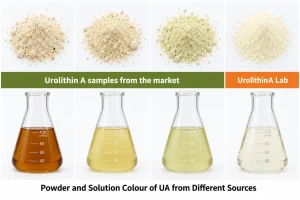
尿石素A污染物检测应确定什么
污染物检测可提供特定样品中特定物质或物质组的证据。这些证据可用于原材料鉴定、来料放行、供应商监控、调查或变更评估。其价值取决于样品的代表性、检测方法的选择性和灵敏度,以及用于结果解释的限度。
结果为阴性或低于阈值并不意味着已评估所有可能的风险。它仅表示在既定条件下,所用方法检测了指定的分析物。报告应明确指出这一界限。
决策到证据图
| 决定 | 可能导致污染的证据 | 补充审查 |
|---|---|---|
| 供应商资质 | 基于过程的小组、方法和代表性结果 | 生产路线、实验室能力和变更历史 |
| 即将发布 | 针对已批准规格的批次特定结果 | 抽样记录、包装检验和授权处置 |
| 流程变更 | 受影响污染物组的前后对比 | 更新风险评估和首批批次监测 |
| 调查 | 采用合适的检测限进行针对性检测 | 根本原因记录、留存样本和监管链 |
| 市场文件 | 范围内已定义的面板和方法参考 | 目的地市场和客户需求 |
Urolithina Lab 的质量框架可以帮助组织技术请求,但最终的评审小组应该就材料等级和项目达成一致。
首先绘制基于过程的污染物分布图。
在选择测试方法之前,请列出操作步骤、投入物和接触材料。反应溶剂、催化剂、萃取助剂、清洁剂、水、工艺气体、设备表面、包装和储存方式都可能产生不同的潜在污染源。
该图谱应区分实际工艺输入和理论风险。封闭步骤中使用的溶剂可能需要进行残留溶剂测试。催化剂中存在的某种元素可能需要进行元素分析。富水操作或长时间的开放式操作可能会改变微生物检测项目。
源到测试映射
| 潜在来源 | 需要考虑的污染物类别 | 待审查的证据 |
|---|---|---|
| 反应或萃取溶剂 | 残留溶剂 | 溶剂清单、去除步骤和批次结果 |
| 催化剂或试剂 | 元素杂质或试剂残留物 | 输入规范和过程清除评估 |
| 水和开放式处理 | 微生物质量 | 水资源控制、环境和采样计划 |
| 设备和接触部件 | 元素或颗粒贡献 | 施工和维护记录材料 |
| 包装和储存 | 与潮湿或异物相关的问题 | 包装规格、检验和存储历史 |
记录每个群体被纳入或排除的原因。这种解释比复制粘贴、与流程毫无关联的小组名单更有说服力。
尿石素A污染物检测:按工艺路线审查残留溶剂
残留溶剂检测应反映生产过程中使用、引入或合理携带的溶剂。供应商应明确列出溶剂清单、去除或干燥步骤、取样点和检测方法覆盖范围。
仅列出“残留溶剂:合格”的报告并未显示检测了哪些溶剂或报告阈值。质量保证部门应要求提供分析物清单、单位、限度、实际结果和方法参考,尤其是在溶剂适用限度较低或残留可能性较高的情况下。
尿石素A污染物检测:残留溶剂审查领域
| 场地 | 问题 | 为什么这很重要 |
|---|---|---|
| 工艺溶剂清单 | 哪些溶剂被使用或可能进入该路线? | 定义候选分析物组 |
| 方法覆盖率 | 该方法能否检测出材料中列出的溶剂? | 通用的顶空法可能无法全面覆盖所有化合物。 |
| 限制和单位 | 结果是否以与规格相同的单位进行比较? | 单位换算误差可能会改变发布决定。 |
| 实际结果 | 显示的是数值还是报告限值? | “未检测到”需要一个明确的阈值 |
| 样品 | 该样品是否与商业批次有关? | 代表性证据对于后续审查至关重要。 |
ICH质量指南库中包含Q3C残留溶剂框架作为其质量参考。请使用适用的版本,并确认买方的产品类别和市场如何解读这些限度。
检查顶空-GC方法的能力
Headspace gas chromatography is commonly used for volatile solvents, but the instrument label does not prove method suitability. Review the column, detector, headspace temperature and time, sample solvent, vial conditions, calibration, specificity and carryover controls.
Sample preparation can create bias. A solvent may partition differently because of the powder, moisture, vial seal or diluent. The validation or verification record should show recovery, precision and sensitivity at the reporting range.
Residual-solvent method questions
- Does the method separate the target solvents from matrix or diluent peaks?
- Are calibration levels suitable for every proposed limit?
- Was recovery assessed in the actual material or a justified surrogate?
- Are vial equilibration and sample hold times controlled?
- How are unknown peaks or unexpected solvents handled?
- Does the laboratory retain chromatograms and system-suitability records?
When the supplier changes a solvent, drying step or analytical method, revisit the panel and method capability rather than carrying forward the old statement without review.
Urolithin A contaminant testing: map elemental impurities to inputs and equipment
Elemental impurities can originate from catalysts, reagents, water, equipment, utilities or contact materials. The relevant list depends on the route and the material’s use. A fixed “heavy metals” line may not identify the elements that matter to a particular process.
Ask whether the supplier performed a process-based elemental risk assessment. The assessment should identify possible sources, purge or removal steps, analytical coverage and the limits used for the intended product category.
Urolithin A contaminant testing: elemental-impurity source review
| Source | Questions | Supporting evidence |
|---|---|---|
| Catalyst or reagent | Which elements are introduced intentionally? | Input specification and process purge data |
| Water or utility | Could the water system add an element? | Water quality and monitoring records |
| Equipment contact | Which alloys, coatings or parts contact the material? | Material-of-construction and maintenance review |
| Packaging | Could the container or closure contribute an element? | Packaging composition and compatibility information |
| External contamination | Could handling or storage introduce particulate matter? | Inspection, cleaning and investigation records |
For the relevant framework, review the ICH Q3D elemental-impurity guidance and then confirm the limits and exposure assumptions that apply to the buyer’s material and market.
Choose ICP-MS, ICP-OES or another elemental method
Inductively coupled plasma mass spectrometry and optical emission spectrometry can provide multi-element analysis, but their capability depends on digestion, calibration, interference control, instrument configuration and reporting limits. The method should state which elements were measured and at what sensitivity.
Digestion is part of the result. Incomplete dissolution, contamination from vessels or reagents, and matrix suppression can produce a misleadingly low or variable value. Request recovery, blank, spike and precision information at the decision range.
Elemental-method checklist
- List the elements in scope and the reason for each.
- Confirm digestion or dilution conditions and vessel controls.
- Review calibration, internal standard and interference correction.
- Check blank, spike recovery, precision and reporting limit.
- Confirm units, basis and conversion to the approved specification.
- Retain raw-data references and reviewed result tables.
A “total metals” result is not a substitute for element-specific evidence when the specification controls individual elements.
Urolithin A contaminant testing: define microbiological quality
Microbiological requirements depend on water activity, process exposure, handling, packaging and the intended product category. The supplier should state which organisms or enumeration tests are included, the sample size, method and reporting units.
Microbiology results can be sensitive to sampling and holding time. The laboratory should use an appropriate neutralisation, dilution and incubation approach, and the report should identify whether a result means absence in a defined sample or a count below a defined limit.
Microbiological review questions
- Does the panel match the material’s water and handling profile?
- Are enumeration units and absence-test sample sizes stated?
- Was the sample taken from the same lot and package under review?
- Are sample transport and laboratory holding conditions documented?
- Does the method include suitability or recovery checks for the matrix?
- Are atypical colonies, invalid tests and repeats handled under procedure?
Do not use a generic microbiological statement as evidence for every finished-product requirement. The finished formula and manufacturing environment may require a separate assessment.
Sampling for Urolithin A contaminant testing
Contaminant results are only as representative as the sample. Powders can segregate, settle, form local agglomerates or carry different moisture levels in different containers. A composite may improve average representation but can hide a container-specific issue.
Define the number of containers, locations, amount, composite rule, tools and sample storage. Link each laboratory portion to the lot and sampling record. For investigations, retain the original sample and a reserve under appropriate conditions.
Urolithin A contaminant testing: sampling-record fields
| Field | Record | Review purpose |
|---|---|---|
| Lot and container | Lot code, container number and package state | Connects results to physical material |
| Location | Top, middle, bottom or defined sample point | Shows whether segregation was considered |
| Quantity | Portion mass and total composite amount | Supports method and reserve needs |
| Tools | Sampler, vessel, cleaning and label controls | Reduces cross-sample and foreign-material concerns |
| Timing | Sampling, transport, receipt and test start | Important for volatile or microbiological fields |
For a lot-specific file request, include the sampling plan with the COA and test reports. A result without a sampling reference is difficult to defend during an audit or investigation.
Urolithin A contaminant testing: define reporting thresholds and units
“Not detected,” “below quantitation limit” and “not tested” are different statements. Every contaminant report should define the reporting limit, units, sample basis, dilution and rounding convention. The specification should use the same basis.
When a limit is expressed per mass of material, confirm whether the laboratory reports on an as-is, dried or another basis. For microbiology, state whether the limit is a count, an absence result or a sample-specific criterion.
Result-language guide
| Report phrase | Meaning to confirm | Buyer follow-up |
|---|---|---|
| Not detected | Signal below a defined detection or reporting threshold | Request the threshold and method |
| Below LOQ | Detected or estimated below validated quantitation capability | Check whether the specification allows this reporting |
| Not applicable | Analyte excluded for a documented process reason | Review the exclusion rationale |
| Pass | Result meets a named limit under a defined method | Request actual result and limit for critical fields |
| Not tested | No result was generated | Do not interpret it as a negative result |
Clear result language reduces disputes between supplier, buyer and laboratory. It also keeps an abbreviated COA from being mistaken for a complete contaminant assessment.
Urolithin A contaminant testing: assess laboratory method capability and data quality
Review the laboratory’s scope, equipment, method validation or verification, reference materials, analyst training and data review. Accreditation can support confidence, but the buyer still needs to confirm that the specific matrix, analytes and limits are within scope.
For outsourced testing, connect the subcontract report to the supplier’s COA and lot. Record who reviewed the data and how conflicting results are handled.
Laboratory evidence checklist
- Controlled method number and current revision.
- Analyte list, calibration range and reporting limits.
- Blank, spike, recovery, precision and system-suitability records.
- Reference standard or certified material information.
- Raw-data or chromatogram reference for investigations.
- Analyst, reviewer, date and authorised result release.
A supplier should be able to explain the result’s scope without disclosing unrelated proprietary information. The buyer should define the minimum evidence in the quality agreement.
Build an incoming Urolithin A contaminant testing panel
An incoming panel should reflect the supplier’s process and the buyer’s approved specification. Some fields may be tested every lot, while others may be periodic, qualification-only or triggered by a change. The frequency should have a documented rationale.
Do not reduce the panel solely because previous lots passed. Review process history, supplier performance, change notifications, market requirements and the consequences of a missed attribute.
Frequency-planning table
| Test frequency | Suitable use | Control needed |
|---|---|---|
| Every lot | Critical attribute or high consequence of a missed result | Defined method, sample and release limit |
| Periodic | Stable process with historical evidence | Trend review and reactivation trigger |
| Qualification | Initial supplier or route assessment | Reassessment after change or performance concern |
| Triggered | Process change, excursion, complaint or unexpected result | Written trigger and authorised test plan |
Document who can change the frequency and which evidence supports that decision. A reduced panel is a controlled strategy, not an informal omission.
Handle unexpected contaminant results
An unexpected result should enter a controlled investigation. Preserve the original sample, preparation, instrument record, chromatogram or raw-data reference, calculation and chain of custody. Confirm transcription, dilution, blank, spike recovery, calibration, method version and sample identity before deciding on additional testing.
Retesting or resampling needs a technical reason and an authorised plan. Do not average an unexpected result with a later result without explaining the data relationship and lot disposition.
Investigation sequence
- Secure the original sample and complete laboratory record.
- Verify lot, container, sampling point and test request.
- Review blank, calibration, recovery, interference and system suitability.
- Check sample preparation, dilution, vessels, reagents and instrument condition.
- Compare related contaminant groups and process or package history.
- Define any retest, resample or supplier investigation in writing.
- Record root cause, disposition, corrective action and follow-up testing.
When a result suggests a process or supplier change, connect the investigation to the active change-control record rather than opening an isolated laboratory note.
Review foreign matter and particulate controls
Chemical and microbiological tests do not describe every visible contaminant. Fibres, metal fragments, elastomer pieces, glass, packaging particles or process residues may require visual inspection, sieving, microscopy or a targeted investigation. The chosen control should match the material, equipment and package.
Ask how the supplier inspects containers, cleans contact parts, handles damaged packs and records unusual particles. A statement such as “free from foreign matter” should identify the inspection method, sample amount and disposition rule when the attribute is critical.
Particulate-control evidence
| Control point | Evidence to review | Follow-up question |
|---|---|---|
| Incoming inputs | Inspection and container-integrity record | Were damaged or opened inputs segregated? |
| Equipment contact | Cleaning, maintenance and material-of-construction records | Could wear or repair introduce particles? |
| Packaging line | Line clearance and label or liner inspection | How are fragments or fibres identified? |
| Finished lot | Visual, sieve or microscopy result with sample basis | What quantity and acceptance rule apply? |
Keep particulate observations with the lot record. They can explain an unexpected elemental result, a damaged liner or a change in powder appearance even when the routine contaminant panel passes.
Link contaminant control to supplier change management
A new solvent, catalyst, raw-material supplier, drying condition, equipment train or subcontract laboratory can change the contaminant risk. The supplier notification should identify the affected group, comparison data and first lot under the new condition.
Review the panel before the change is implemented. If an old method cannot measure a newly relevant analyte, update the method and specification through controlled approval.
Change-trigger checklist
- New or substituted process solvent.
- New catalyst, reagent, water source or equipment contact material.
- Change in drying, purge, washing or purification step.
- New manufacturing, packing or testing site.
- New container, liner, closure or storage route.
- Unexpected trend, complaint, excursion or laboratory discrepancy.
The separate Urolithin A procurement brief can capture these questions before a supplier change reaches a commercial order.
Review market and product-category boundaries
Contaminant limits depend on the material’s use, exposure assumptions, market and applicable standard. A limit suitable for one product category may not be the correct limit for another. The buyer should document which framework was used and who approved the interpretation.
For U.S. dietary-supplement records, 21 CFR 111.70 describes specifications for components and finished dietary supplements, including contamination-related controls. It is a defined U.S. reference, not a universal limit table for every market.
Use the technical resources page to request the supplier’s current specification, but complete the destination-market assessment within the buyer’s quality system.
Assemble a contaminant evidence package
A complete file should allow another qualified reviewer to reconstruct why the panel was selected, how the sample was tested and which decision was made. The package can contain controlled summaries when raw data are restricted, but each summary needs a traceable reference.
Evidence-package index
| File | Minimum content | Decision supported |
|---|---|---|
| Process map | Inputs, solvents, catalysts, water and contact materials | Panel selection and exclusions |
| Specification | Analytes, units, limits and methods | Release interpretation |
| Sampling record | Lot, containers, locations and composite rule | Representativeness |
| Laboratory report | Actual results, thresholds, method and approval | Analytical evidence |
| Trend or change review | Historical comparison and impact assessment | Frequency and requalification |
| Disposition | Release, hold, retest, return or rejection decision | Authorised lot status |
使用质量文件申请表指定产品阶段、目标市场、批次和所需的确切污染物字段。
建立买方污染物评分卡
评分卡有助于质量保证部门优先处理后续工作,避免将冗长的分析物清单误认为强有力的控制策略。证据质量和流程相关性比报告长度更重要。
污染物证据评分卡
| 区域 | 强有力的证据 | 条件证据 | 差距 |
|---|---|---|---|
| 小组的理由 | 流程来源和排除项均有记录。 | 通用面板及供应商说明 | 无流程链接 |
| 方法能力 | 验证、限度、回收率和特异性数据均可提供。 | 受控摘要可应要求提供 | 方法名 |
| 采样 | 批次、集装箱、位置和时间均被记录 | 地块清晰,但位置细节有限 | 未识别样本 |
| 结果 | 实际值、单位、阈值和限值均已显示。 | 通过声明并附上支持文件 | “通过”不带范围 |
| 变更控制 | 触发条件、比较数据和首个受影响批次均已定义。 | 实施后计划发出通知 | 链接无变化 |
| 处置 | 授权发布和调查路径均有记录。 | 需向业主澄清 | 没有负责任的决定 |
使用评分卡申请下一份有用的记录或测试。它不能取代买方已验证的方法、供应商审核、质量协议或市场评估。
关于尿石素A污染物检测的常见问题
仅检测“重金属”是否足以检测元素杂质?
并非总是如此。该短语可能无法明确指出具体要素、限值、单位或方法能力。请查阅基于过程的要素列表,并在规范要求时索取针对特定要素的结果。
“未检测到”是否意味着零?
不。这意味着在所述条件下,分析物的浓度未超过该方法设定的阈值。报告应显示阈值和样本来源。
是否应该对每批产品进行残留溶剂检测?
频率取决于溶剂路线、工艺能力、历史数据、规格和变更触发因素。减少或定期计划应有书面理由和重新启动规则。
供应商的污染物检测板可以复制到所有市场吗?
否。限值和所需分析物可能取决于产品类别、暴露假设和目标市场规则。请将供应商小组提供的技术信息作为参考,然后完成买方市场评估。
当污染物检测结果超过限值时,质量保证部门应该怎么做?
保留原始记录,将批次置于相应的质量状态,并遵循已批准的调查方案。在做出授权处置前,审查取样、方法性能、制备、工艺历史和相关批次。
一份实验室报告能否涵盖溶剂、元素和微生物学?
只有当该实验室具备各组所需的检测方法、设备、人员和范围时,外包报告才能被接受。前提是监管链、方法参考和审核责任都清晰明确。
通过污染物检测是否就能证明成品符合标准?
不。原材料只是其中一项投入。成品成分、加工工艺、包装、检测以及目标市场要求都需要单独评估。
将污染物数据转化为站得住脚的释放决定
一套完善的尿石素A污染物检测方案始于工艺流程,终于最终的批次审批决定。在这两者之间,买方需要有充分依据的检测小组、具有代表性的样品、可靠的检测方法、清晰的报告阈值、最新的产品规格以及可追溯的记录。
在批准供应商或批次之前,请索取基于流程的专家组理由、溶剂和元素清单、微生物检测范围、方法概述、样品记录、实际结果和变更触发因素。对于技术审核,请通过质量文件申请表提交目标市场、产品阶段和所需的质量文件。
范围说明:本文是一个B2B原料质量框架。它不能取代买方已验证的方法、质量协议、法规评估、供应商审核或成品放行体系。